
All you need to know about strategic customer engagement


What is strategic customer engagement?
Strategic customer engagement is a planned approach to interacting with customers that builds stronger relationships and drives long-term growth.
- It uses clear plans, not random or reactive contact.
- It spans every stage, from first touch to after the sale.
- It lifts loyalty, referrals, brand value, and revenue.
A go-with-the-flow way of engaging with customers can keep your business alive. Still, it is rarely enough.
Strategic customer engagement helps your business grow and reach its full potential. So a clear plan beats a reactive one every time.
What is customer engagement?
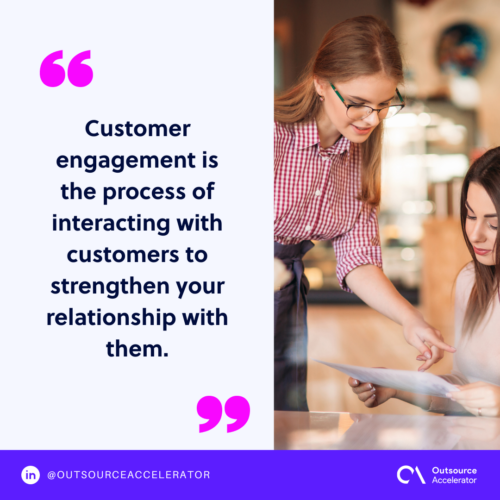
Customer engagement is the process of interacting with customers to strengthen your bond with them. You can do it through many channels, such as:
- Emails
- Social media platforms
- Community forums
- Websites
For many companies, engagement starts at the first contact. Then it continues well past the point of purchase.
A steady, positive experience comes from a strong engagement plan. So you must plan your actions and the resources you need.
Hugo is a leading BPO that offers skilled social media and customer support agents, helping businesses manage interactions across multiple channels efficiently.
Partner with Hugo to elevate your customer engagement, strengthen relationships, and turn every interaction into a positive experience. Start working with Hugo today to give your customers the support they deserve.
Why is strategic customer engagement important?
It is easy to find businesses that sell the same things you do. So you can feel easily replaceable.
One factor sets you apart: how you treat your customers. So a strong engagement strategy gives you a real edge.
With strategic customer engagement, people are more likely to choose you. As a result, they keep choosing you as long as your methods keep working. This also supports lasting customer loyalty.
5 benefits of implementing strategic customer engagement
Now you know what strategic customer engagement is and why it matters. So let us look at the benefits for business owners.
A strong engagement strategy gives you the following:
1. Better customer experience
Customers are the backbone of every strong business.
Customer engagement strategies focus on actions your customers enjoy and take part in. So they lead to a better experience for everyone.
A good strategy means customers feel better about supporting you. As a result, they stick around longer.
Most companies opt to outsource customer service to renowned providers like 123Employee to boost customer engagement.
2. Enhanced customer relationship
Strategic customer engagement shows that your company does more than chase money.
Customers find value in your products and services. They also learn to trust you. So they see a brand that listens, not a greedy one.
Because of this, your relationship with customers keeps improving over time.
3. Increased referrals
When you engage customers well, referrals go up.
Happy customers spread the word. For example, they vouch for you to friends, family, and social media.
So this brings in more customers. Then the cycle of engagement and reward keeps rolling.
4. Improved brand value
Good engagement lifts your brand value.
Customers see you as more than a product or service. Instead, they see a solution they rely on. This is where a personalized customer experience makes a real difference.
Strategic engagement also boosts your company’s lifetime value. So the better your strategy, the longer customers stay and spend.
5. Revenue boost
Happy customers come back. They also try new products and refer your business to others.
As a result, revenue climbs. It rises far more than it would without a real engagement plan.
You can also earn from the engagement strategies themselves. So let us explore that idea next.
Ways to implement strategic customer engagement (with real-life examples)
There are many strategies for customer engagement. You and your team can even build your own.
Below are four common, proven customer engagement strategies:
Personalize customer interactions
Your customers are real people with their own tastes. So they appreciate being treated that way.
Customers do not want to feel like numbers on a screen. So acknowledge each person. As a result, they see that you care.
This strengthens your bond with customers. Plus, your business benefits, revenue-wise. Strong personalization also lifts customer satisfaction.
Here are some companies with great personalized interactions:
Spotify
Spotify has long built playlists in a “Made for [Name]” section.
These playlists gather songs based on a listener’s past genres, artists, albums, and songs. So each list feels custom-made.
Netflix
Netflix works in a similar way. It suggests shows and movies based on your watch history.
These picks sit under the “Top Picks for [Name]” section. So it helps people who struggle to choose a title.
Companies in general
Many businesses now use auto-responses with a fixed script. Only the customer’s name changes.
However, this can backfire. For example, a mistake can make the message look auto-generated. So it may do more harm than good.
Address customer feedback
Praise for your products feels great. It also lifts team morale. After all, it reflects your team’s hard work.
Negative feedback can sting. Still, listening to it matters just as much. So you learn what customers like and can keep improving.
Addressing feedback shows customers that you listen and can handle criticism. As a result, trust grows.
Negative feedback is a chance to turn something bad into something good. Here is an article on how to deal with and respond to negative reviews.
Here are real examples of customer feedback being addressed:
Twitter added the number of tweet views as a main stat on a tweet. It sat right next to replies, retweets, and likes.
When the feature launched, many users complained. They said it was unwanted. They also said it broke the muscle memory they had built over years.
It may sound like a small issue. Still, so many people disliked it that Twitter listened and made a change.
Twitter changed the feature soon after release. They did not remove it. Instead, they moved the new button to the far right.
The change still bothers some users. Even so, they find it better than the first version.
Sonic the Hedgehog (2020)
Sega first released a trailer for their Sonic the Hedgehog (2020) movie. Many fans complained about Sonic’s look.
Sega had given Sonic human-like teeth and eyes. Fans did not approve.
So Sega listened. Their animators remade Sonic to match the original design.
When fans saw the new version, they liked it far more.
Create customer loyalty programs
“You scratch my back, I scratch yours.”
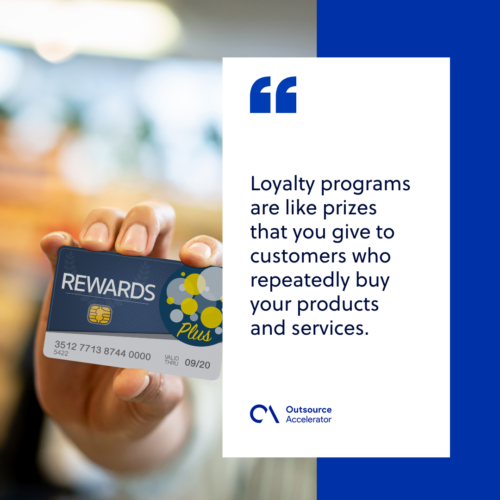
Loyalty programs are like prizes for customers who buy again and again. So they reward your solid customers for staying loyal.
Rewards may include discount coupons, free products, or entry to exclusive events.
Once you set up a loyalty program, it becomes a steady cycle. Customers support you, you reward them, and it continues.
Here are some companies doing loyalty programs right:
Sephora
Sephora’s loyal customers earn rewards through its Beauty Insider program.
Customers earn points for each purchase. Then they redeem those points for rewards they choose.
Sephora also gives better rewards to its most loyal customers. So people who spend the most get the best perks. As a result, this can encourage even more spending.
The Body Shop
The Body Shop built a loyalty program called “Love Your Body Club.” Customers can sign up to become members.
Members earn points for each dollar they spend. Once a member hits a hundred points, they get 10 dollars to use.
They can spend the 10 dollars on products or donate it to a partner charity. So it shows the company’s ethics and generosity. As a result, customers who donate feel they share those values.
Host social media contests
In this age of tech, a strong social media presence is a must. So it helps any business succeed.
One way to use social media well is to host contests.
Social media contests get customers to engage with your brand. They also help you reach more people and gain willing participants.
Here is an example of a social media contest done well:
Designer Shoe Warehouse (DSW)
DSW released its #DSWCutLoose contest on TikTok. To enter, participants posted a video of themselves dancing to the song “Footloose.”
It was a fun way for customers to engage with DSW. It also let them show their dance skills and DSW’s products.
The prize pool included ten $200 DSW gift cards, one for each of ten winners.
By hosting this contest, DSW earned more than eight billion combined views from all the video entries.
Establishing strategic customer engagement in your business
From small firms to global giants, companies plan their customer engagement. And it works well for them.
Engagement strategies are vital for a lasting edge over rival brands. So they help you stand out and stay ahead.
Strategic customer engagement benefits both you and your customers. For example, it brings a better experience, stronger relationships, more referrals, higher brand value, and a revenue boost. Many teams also outsource customer service to keep this steady.
Some methods you can use are simple. First, personalize interactions. Next, address feedback. Then create a loyalty program and host social media contests.
Planning and running engagement strategies takes real effort. Still, that effort is a small price for the benefits your company gains.
Frequently asked questions (FAQs)
What is the difference between customer engagement and strategic customer engagement?
Customer engagement is any interaction with customers. Strategic customer engagement is planned and goal-driven. So the strategic version delivers steadier results.
Why is strategic customer engagement important?
It sets you apart from rivals who sell the same things. As a result, customers choose you and stay loyal. In short, it drives growth.
What are examples of strategic customer engagement?
Personalized picks, loyalty programs, and social media contests all count. For example, Spotify, Sephora, and DSW use these methods well.
Can you outsource customer engagement?
Yes. Many companies use BPO providers to manage support and engagement. So they get skilled agents without a large in-house team.
Key takeaways
- Strategic customer engagement is planned, not reactive.
- It builds loyalty, referrals, brand value, and revenue.
- Personalization and feedback are core engagement methods.
- Loyalty programs and social media contests keep customers active.
- Outsourcing support can help you engage customers at scale.






 Independent





