
A comprehensive guide to enterprise risk management (ERM)


What is enterprise risk management and why does it matter?
Enterprise risk management (ERM) is a whole-company way to find, assess, and manage the many risks a business faces.
- It gives leaders one clear view of risk across the firm.
- It helps teams act on threats before they turn into crises.
- It also helps firms spot opportunities inside those risks.
Today, companies work in a fast-changing world. As a result, they face many risks that can hurt their operations. One way to handle these threats is enterprise risk management. It offers a clear way to manage and reduce risks that could harm a business.
Data from Gitnux shows that 76% of companies have or plan to run an ERM program. So most firms now see its value. Next, let us look at ERM, its core aims, and the threats it covers. We will also review its pros, cons, and key parts.
What is enterprise risk management (ERM)?
Enterprise risk management (ERM) is a step-by-step way to find, assess, and manage threats. It aims to give a full view of risks and their impact on your goals. As a result, firms can build risk rules into daily work.
ERM also builds a risk-aware culture across the company. Because of this, teams address issues early, before they grow. In turn, the firm is better prepared for what comes next.
Core objectives of enterprise risk management
A strong enterprise risk management process matters for every business. It helps you manage risks and seize chances early. ERM focuses on a few core aims, which include the following.
Identifying risk
First, ERM aims to find all relevant threats. It looks for risks that may affect operations and goals. So it reviews both internal and external factors with care.
Assessing risk
Next, ERM assesses each threat it finds. This means judging the likely impact on the company. As a result, firms can rank risks by how serious they are. Then they can assign the right resources.
Managing risk
The third aim is a clear strategic plan. Here, firms manage risks with informed choices. For example, they pick the best response, assign duties, and build action plans.
Monitoring risk
Finally, ERM includes ongoing monitoring. This means tracking data to see how risk work is going. In addition, it checks that each action reduces threats as planned.
Types of risks addressed by enterprise risk management
Enterprise risk management covers a wide range of serious risks. These threats can affect the firm’s goals and operations. Here are the main types an ERM plan is built to address.
Compliance risks
Compliance risks are the chance of legal or regulatory penalties. They can also bring financial loss or damage to reputation. Often, they come from breaking laws, rules, or industry standards. To learn more, see this guide to compliance risks.
Legal risks
Legal risks involve the threat of legal action against the firm. For example, they include lawsuits, fines, and judgments.
Strategic risks
Strategic risks link to choices that affect your planned goals. For example, they may include market shifts, tough rivals, or weak planning.
Operational risks
Operational risks come from internal issues or outside events. For example, they can stem from human error, tech failures, or supply chain problems. A solid business continuity management plan helps limit this kind of damage.
Security risks
Security risks cover harm to security systems and data assets. They can come from inside or outside the firm, such as cyber-attacks or data breaches. Because of this, strong cybersecurity best practices are a core part of any plan.
Financial risks
Financial risks affect stability, cash flow, or profit. For example, they include market swings, credit defaults, or weak financial controls. In addition, tools like fraud analytics help firms catch losses early.
Advantages of enterprise risk management
A strong ERM strategy brings several clear benefits. These include the following.
- Improved decision-making. ERM gives leaders full risk information. As a result, they make better choices and use resources well.
- Reduced costs. ERM helps you find and reduce threats early. So it can lower the cost of risk events.
- Enhanced resilience. ERM helps firms manage risks in advance. In turn, this cuts surprise disruptions and boosts adaptability.
- Optimized resource allocation. ERM sorts threats and shares resources to match. So resources go where risks matter most.
- Stakeholder confidence. ERM shows a real commitment to managing risk. As a result, stakeholders trust the firm to handle challenges.
Disadvantages of enterprise risk management
ERM offers many benefits. Still, there are some challenges to weigh.
- Resource-intensive. ERM takes real effort, coordination, and resources. So firms may struggle to run it across every department.
- Risk aversion. Too much focus on risk can make firms overly cautious. As a result, they may miss chances to grow. It helps to balance caution with organizational agility.
- Limited predictive accuracy. No plan can predict every threat. So sudden or fast-moving risks can still slip through.
- Resistance to change. ERM can be hard to roll out. That is because it needs shifts in culture and process.
- Over-reliance on ERM. Firms may lean on ERM too much. In turn, they may neglect other key parts of the business.
Key components of an ERM plan
It helps to know the biggest risks facing your firm. A good enterprise risk management plan has a few key parts. Together, they form a full framework.
Internal environment
The internal environment covers a firm’s:
- Culture
- Values
- Policies
- Procedures
- Risk appetite
- It also shares risk rules with the team and helps assign resources.
In addition, it includes leadership commitment, governance, and risk philosophy.
Objective setting
Objective setting defines the firm’s goals. It also aligns them with risk strategies. With clear goals, firms can spot threats that block progress. Then they build the right response plans.
Event identification
Event identification finds events that could affect your goals. This covers both internal and external events. As a result, it flags risks and opportunities alike.
Risk assessment
Risk assessment judges the odds and impact of each risk. For example, a direct risk could be reputation harm from breaking a law. The residual risk could be staff leaving to distance themselves. So this step helps rank risks and share resources well.
Risk response
Risk response builds plans to address each threat. Firms can respond in these ways.
- Avoidance. This aims to remove a risk fully. Firms pick it when the downside outweighs the gain.
- Mitigation. This cuts the odds or impact of a risk. For example, it uses controls or safeguards to limit harm.
- Transfer. This shifts risk to another party through insurance, contracts, or outsourcing. Still, firms should weigh the risks of outsourcing before they hand off work.
- Acceptance. Firms accept some risks when the impact is low. They then manage these within safe limits.
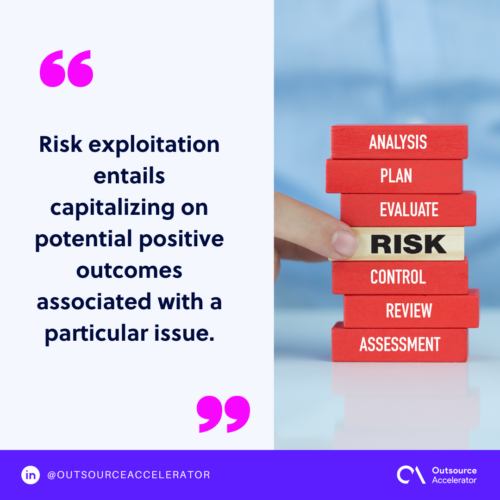
- Exploitation. Sometimes firms find chances inside risks. So they act on the positive outcomes a risk can bring.
Control activities
Control activities carry out steps to reduce risk. For example, they include duty separation, security measures, and clear policies. Also called internal controls, they come in two types.
- Preventative controls. These stop risks before they happen. So they cut the odds of bad events.
- Detective controls. These catch risks that already occurred. As a result, they flag issues that slipped past prevention.
Information and communication
This part gathers, studies, and shares risk information. Effective communication keeps stakeholders informed about risks and ERM plans.
Monitoring
Monitoring is the ongoing review of ERM work. Regular checks keep ERM aligned with goals. In turn, they help the plan adapt to new threats.
Enterprise risk management framework
An ERM framework gives a clear, structured way to apply these practices. Traditional methods often look at single risks alone. An ERM framework takes a whole-company view instead.
There are many established ERM frameworks to reference. Here is the gist of what one can include.
- Establish risk context. First, set the scope, key stakeholders, risk goals, and appetite.
- Identify potential risks. Next, find internal and external risks that may affect operations.
- Risk assessment. Then judge the odds and impact to flag key threats.
- Risk response and decision-making. After that, apply response plans for the best outcomes.
- Ongoing monitoring. Finally, review results often to check that responses work.
Frequently asked questions
What does enterprise risk management do?
Enterprise risk management helps a firm find, assess, and manage risks. It gives one clear view of threats across the company. As a result, teams act early and with more confidence.
What are the main types of risk in ERM?
ERM covers compliance, legal, strategic, operational, security, and financial risks. Each type can affect goals in a different way. So a full plan addresses all of them.
What are the core steps of an ERM process?
The core steps are identify, assess, manage, and monitor risk. Together, they form a clear cycle. In addition, ongoing review keeps the plan current.
Is ERM only for large companies?
No. Firms of any size can benefit from ERM. Smaller firms may use a simpler version, yet the aims stay the same.
How is ERM different from traditional risk management?
Traditional methods often handle risks one at a time. ERM takes a whole-company view instead. As a result, it links risks to goals across every team.
Key takeaways
- ERM is a whole-company way to find, assess, and manage risk.
- Its core aims are to identify, assess, manage, and monitor threats.
- It covers compliance, legal, strategic, operational, security, and financial risks.
- It improves decisions, cuts costs, and builds resilience, though it needs real resources.
- A clear framework and ongoing monitoring keep the plan effective over time.






 Independent





