
Hybrid recruitment: Definition, pros, and cons


What is hybrid recruitment and how does it work?
Hybrid recruitment blends traditional, in-person hiring with digital tools, so you get the speed of online hiring plus the personal read of face-to-face meetings.
- It covers the whole process, from screening to onboarding.
- It cuts costs and widens your reach for talent.
- It keeps the human touch of in-person interviews.
Online hiring and virtual interviews are now the norm. They are easy to run and quick to deliver results. Still, traditional hiring is not gone.
Face-to-face interviews still help you read a candidate in person. So what if you could combine both? That is exactly what hybrid recruitment does.
This article covers the pros and cons of hybrid recruitment, plus some handy tips.
What is hybrid recruitment?
Hybrid recruitment blends traditional and digital hiring into one talent acquisition process.
It is not just about interviews. In fact, hybrid recruitment covers the full journey, from screening candidates to onboarding. To map the full flow, see this guide to end-to-end recruitment.
By merging online and offline tactics, firms save money. As a result, they also reach a more diverse, talented pool.
Hybrid recruitment vs. Traditional recruitment
The main difference is the use of digital tools. In hybrid recruitment, online methods form the base, even when some steps happen in person.
For example, firms no longer rely on newspaper or print ads. Instead, they use tech to find candidates.
This may include social media or online forums. So the digital approach reaches beyond job posts into interviews and onboarding too. There are many types of recruitment methods that fit this blend.
Why is hybrid recruitment important?
Without hybrid recruitment, firms must rely on traditional hiring alone. That path comes with many limits.
Traditional hiring eats up time and money. For example, job fairs, print ads, and newspaper listings all add cost.
If firms stuck to that today, finding candidates would be hard. So much of the time and effort would go to waste.
Hybrid recruitment fixes this. It uses online tools to cut time and cost. As a result, people get hired faster, and firms reach more candidates.
Pros of hybrid recruitment
Hybrid recruitment is not new. In fact, it already offers firms and employees many gains. Here are the main ones.
Increased speed and efficiency
Using both traditional and digital methods helps your HR team work faster. So the whole process runs more smoothly.
For example, online interviews and automated screening cut time-to-hire. As a result, you gain flexibility for other tasks, and candidates get hired quickly.
Wider reach of candidates
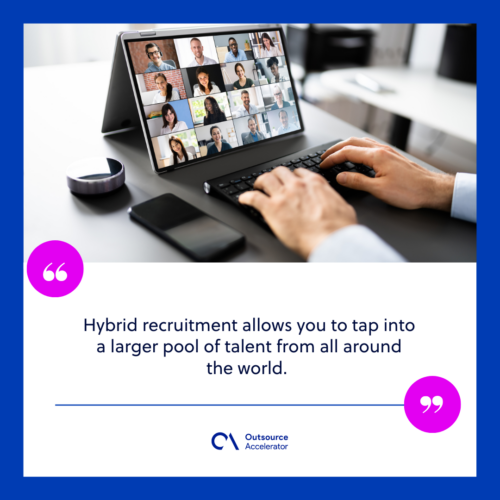
Hybrid recruitment lets you tap a global talent pool.
Since tech reaches almost anywhere, you are not limited to your local area. This matters most for fully remote firms.
So by using social media, firms can offer jobs to candidates anywhere. As a result, it breaks down location barriers and speeds up hiring. Strong candidate sourcing strategies widen this reach further.
Improved candidate experience
Firms now put candidate experience first. So they make hiring smooth and simple. Hybrid recruitment helps you communicate with ease and add a personal touch.
The easier the process, the more likely a candidate accepts your offer. In turn, they are more likely to stay.
A good experience also spreads. As a result, happy candidates may recommend your firm to others.
Enhanced reputation
Hybrid recruitment helps you look modern and adaptable. It shows you keep up with new tech and shift your hiring to match.
So your brand grows stronger. As a result, you attract more candidates and keep them longer.
Reduced costs
Hybrid recruiting cuts costs a lot. It removes the need to budget for job fairs or classified ads. So hiring gets cheaper, and sometimes even free.
For example, posting a job on LinkedIn or messaging a candidate costs nothing. Because of this, you can spend the saved budget on other priorities.
Future-proofing
Digital hiring keeps growing more normal. So firms everywhere adapt to prepare for the future.
Firms that adopted hybrid recruitment early were ready when work went remote. As a result, they kept running and even thrived.
So hybrid recruitment is a smart future-proofing move. This is true especially for firms that still lean on traditional methods.
Cons of hybrid recruitment
Hybrid recruitment brings many perks. Still, it has a few drawbacks to keep in mind.
Initial costs
Cost is both a plus and a minus. Hybrid recruitment saves money over time, but it still needs upfront funds.
For example, firms must pay for software, onboarding, and new hire salaries. So this can be a hurdle for smaller or newer businesses.
Lack of personal touch
Heavy use of tech can remove some human contact. For example, meeting on a screen is not the same as meeting in person.
Human contact still matters in hiring. It helps you read a candidate’s manner and attitude, which is harder over video.
Limited assessment of soft skills
Some tools struggle to gauge soft skills. These include interpersonal ability, cultural fit, and presentability.
These traits are easier to judge in person. So an in-person interview still adds real value.
Hybrid recruitment tips to remember
You must prepare well before you try hybrid recruitment. Here are some useful tips.
Create a hiring strategy
Like any hiring, hybrid recruitment needs a plan. So it calls for a clear, steady approach that pays off over time.
Take time to review your recruitment metrics and use helpful software. In addition, set clear goals and KPIs to guide you.
Be selective about where you post job listings
Do not post on every site you find. Otherwise, your listings may look spammy.
Some job portals get far more visitors than others. So think about where your target group looks for work.
A mix of general and specialized portals works best. As a result, you reach both a wide audience and the right candidates.
Develop a smooth orientation process
Keep the process smooth right up to the first day on the job.
So build a simple onboarding flow that feels positive for new hires. Video interviews can help here too, so review the best video interview software before you start.
New hires may not stay long without proper orientation. So share roles and expectations clearly to ease their move.
Best practices for building a hybrid recruiting strategy
Your strategy works best with the right habits. Here are some practices to keep in mind.
Continuous learning and adaptation
Recruitment keeps changing as firms find new ways to hire. So you must keep learning.
Stay updated on hiring trends and new practices. As a result, you secure the best candidates and gain an edge.
Prioritize candidate experience
Make candidates feel valued at every step. So take proactive steps to respect their time and effort.
Whether you hire them or not, thank them for applying. Because of this, they leave with a good view of your firm.
Maintain virtual relationships
Personal connections matter, online or not. Candidates like to feel valued, even over a screen.
So foster these ties with personal messages and clear, honest updates. As a result, trust grows on both sides.
Moving forward with hybrid recruitment
Hybrid recruitment keeps changing how firms find new talent.
With online recruitment software and networking tools, plus in-person steps, hiring is faster and easier. No wonder the job market is so competitive. AI can speed things up further, so explore these AI recruitment tools.
So consider a hybrid recruitment strategy if you want all its rewards. As a result, you can find the best people to grow your business.
Frequently asked questions about hybrid recruitment
What is hybrid recruitment in simple terms?
Hybrid recruitment blends online and in-person hiring. So it uses digital tools for speed and reach. It also keeps face-to-face steps for a personal read.
Is hybrid recruitment cheaper than traditional hiring?
Yes, over time. It removes many costs, like print ads and job fairs. Still, you need some upfront funds for software and onboarding.
What are the main drawbacks of hybrid recruitment?
The main drawbacks are upfront costs and less personal contact. Some tools also struggle to gauge soft skills. So in-person steps still add value.
Does hybrid recruitment work for small businesses?
Yes. Many digital tools are low cost or free. So small firms can widen their reach without a big budget.
How do I start with hybrid recruitment?
First, build a clear plan with goals and KPIs. Next, pick the right portals and tools. Then design a smooth onboarding flow for new hires.
Key takeaways
- Hybrid recruitment blends online and in-person hiring.
- It cuts costs, widens reach, and speeds up hiring.
- It keeps the human touch that video calls can miss.
- Upfront costs and soft-skill gaps are the main drawbacks.
- A clear plan and good candidate experience drive success.






 Independent





