
Outsourcing staff amid pandemic


Is outsourcing staff a smart move for your business?
Yes. Outsourcing staff gives you skilled workers, lower costs, and less risk, all without the load of hiring in-house.
- You get trained people and modern tools right away.
- You cut overhead while you keep service quality high.
- You share risk with a partner who handles hiring and onboarding.
Many businesses have had to rethink how they run their teams. As a result, more of them now turn to outsourcing to stay lean and flexible. Outsourcing staff lets you tap a global talent pool without a big fixed payroll.
Think of it as renting expertise on demand. You get skilled people when you need them, then scale back when you do not. So your costs track your real workload. In addition, you avoid the slow, costly grind of local hiring.
The impact of COVID-19 on outsourced operations reached many countries that support the Business Process Outsourcing (BPO) sector. Still, demand for outsourced services kept rising. For the wider picture, see what drives the rapid growth of outsourcing today.
The impact of COVID-19 on businesses
Global shocks can test any company. For example, COVID-19 has impacted the entire global economy, and firms that outsource core work faced extra pressure to deliver. Even so, many clients still saw strong demand for outsourced services and staff.
However, remote setups can lower the control a company has over its team. So staff and employers lean on clear communication and shared tools. Because of this, good systems matter more than ever.
Why is outsourcing a good idea amid the pandemic?
Outsourcing staff carries real, measurable risks. Still, it offers businesses clear gains. Here are the main ones.
1. Lower cost base
One big benefit of outsourcing is a lower cost base. You reach a skilled workforce in another country at a fraction of local rates. As a result, you can focus more on the work that grows revenue. For more ideas, review these cost saving strategies that finance leaders use.
The savings go beyond salaries. For example, you also cut spend on office space, hardware, and software licenses. Meanwhile, your provider absorbs those fixed costs. So your business stays nimble and keeps more cash for growth.
2. Access to the latest technology
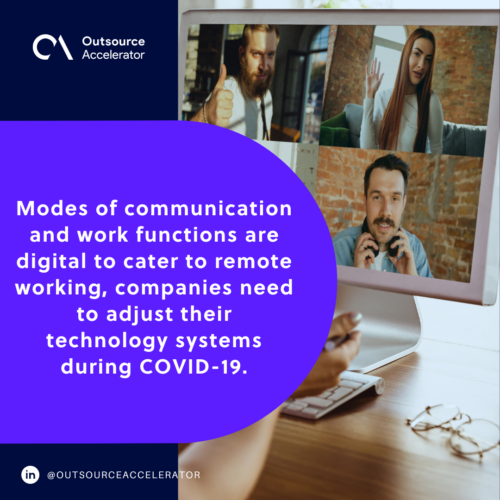
Most work and communication now runs on digital tools to support remote working. So companies need to keep their systems current. Outsourcing gives your business access to the provider’s technology and digital resources.
For example, a provider may run accurate payroll and benefits software. That helps your business process pay quickly. It can also include accounting software that makes tax work simpler and more accurate. In addition, these tools spare you the stress of managing databases from afar.
You also gain enterprise-grade security without the price tag. Good providers invest in strong tools that a small firm could not fund alone. So your team works on modern systems from day one. As a result, you keep pace with larger rivals.
3. Reduced risks
Managing risk has become harder for many firms. In a fast-moving market, good risk control is now vital. So a partnership with an outsourcing company can help you cope with sudden change.
A good partner brings the technology, skills, labor, and process you need. Meanwhile, service quality stays high. You also skip the work of recruiting, training, and buying tools, because your partner handles it. To go deeper, read this guide to enterprise risk management.
Where to hire outsourced staff?
To find outsourced staff, look for trusted outsourcing companies such as Six Eleven BPO. Through their world-class outsourcing services, they recruit strong staff for your operations.
They also handle the full recruitment and onboarding process, which saves you time and money. Good providers stay flexible to your needs. As a result, they can help you hit your target business outcomes. For a wider view, see how recruitment process outsourcing works and how it ties into business process outsourcing and its advantages.
Before you sign, do a little homework. First, list the tasks you want to hand off. Next, set clear goals and simple ways to measure them. Then check that the provider has proven skills in your field. Finally, start with a small pilot team. So you can build trust before you scale up.
Frequently asked questions
What does it mean to outsource staff?
It means you hire workers through a third-party provider instead of your own payroll. The provider recruits, employs, and supports the staff. Meanwhile, you still direct their daily work.
How much can outsourcing staff save?
Savings vary by role and country. Still, many firms cut labor costs by a wide margin versus local hires. On top of that, you save on office space, tools, and training.
Is outsourced work secure when teams are remote?
It can be, with the right controls. For example, good providers use secure tools, clear access rules, and regular checks. So your data stays safe even with a remote team.
Which tasks are easiest to outsource first?
Start with support tasks that follow clear steps. Common picks include customer service, payroll, data entry, and IT support. Next, you can add more complex roles as trust grows.
How do I choose the right outsourcing partner?
First, check their track record and client reviews. Next, confirm they offer the skills and tools you need. Finally, make sure they can scale with your business.






 Independent





