
Customer service: Training, tips, and certifications


What is customer service training and why does it matter?
Customer service training teaches your team the skills to help customers well, solve problems fast, and leave a good impression every time.
- It builds core skills like listening, empathy, and clear communication.
- It comes in many forms, from classroom sessions to eLearning and role-play.
- As a result, it lifts customer satisfaction, loyalty, and your brand name.
Good customer service lets companies connect with people, fix issues, and show they care. When it is done well, it leaves a lasting mark. So strong customer service training should cover all the bases. This includes retention, escalation, and rebuttal. Most deep courses teach these three as part of talking with customers. Still, many modules aim at agents with experience. Because of this, new hires may need extra support to keep up.
What is customer service training?
Customer service training prepares your staff to deliver great service. It gives them the knowledge, skills, and tools they need. As a result, they can help customers, fix issues, and create good experiences.
Executive Boutique Call Center is a strong example of a dedicated outsourcing provider. It has skilled, well-trained technical and customer support agents. Its teams have finished their computer degrees and full training.

Why is customer service training important?
Customer service training matters for a few key reasons.
Customer satisfaction
Well-trained staff give fast, correct, and polite service. As a result, customers feel happy. So they are more likely to return and refer others. Strong customer satisfaction drives real growth.
Brand reputation
Great service reflects well on your brand. It builds trust and shows you care. Because of this, it can pull in more customers over time.
Customer retention
Training helps staff handle complaints and issues with ease. As a result, you keep more customers who might otherwise leave. Poor service, on the other hand, drives people away.
Customer service skills
Customer service skills fall into two groups: hard skills and soft skills. Hard skills are clear abilities, like attention to detail and tech know-how. They also cover strong communication. Soft skills, meanwhile, cover the agent’s attitude and personality at work. For a full list, see our guide to the top customer service skills every agent should have.
Types of customer service training programs
A good program helps both new hires and seasoned team members. Here are some quality customer service training methods.
1. Classroom training
Classroom training is one of the most common ways to onboard staff. This setup usually has 20 to 30 trainees, a team leader, and a trainer. The group learns the module, plus company values, rules, and goals. Most of the time, this works well for large firms with many new batches. So a focused session produces skilled, ready agents.
2. Webinar
Webinars have grown fast with the rise of online meeting apps. As a result, they are now a top choice for training. A webinar has a speaker, a moderator, and trainees on the call. There are set and open questions to spark discussion. The module can split into short sessions. This lets trainees rest and review each part.
3. eLearning
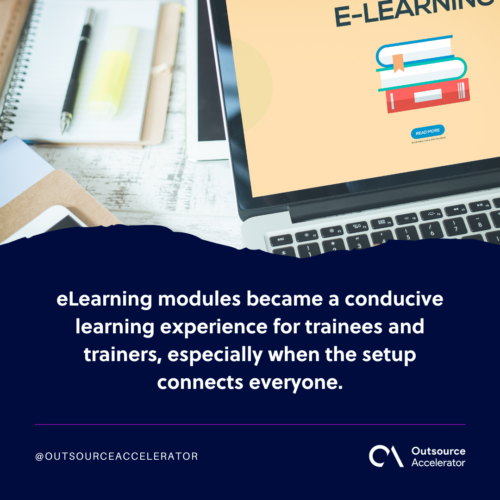
eLearning gives trainees and trainers a flexible way to learn together. When the setup links everyone, it works even better. Teams can work on virtual projects and modules as one. As a result, they build skilled staff and leaders. Trainees also learn at their own pace. This builds self-discipline, focus, and accountability. Of course, this is the ideal case in most eLearning classes, according to eLearning Industry.
4. Mentor-mentee
We all know the mentor-mentee bond. Many team leaders use it for safe one-on-one talks. So both sides can share ideas, views, and feedback. A healthy mentor bond helps in every workplace, not just customer service. In fact, Forbes reported that mentored employees last longer than those who didn’t receive any mentorship. So growth and learning clearly matter at work.
5. Roleplay
Roleplay is simple and easy to pick up. You can use it as an icebreaker or a quick group drill. It can also work as urgent, hands-on training. With this method, trainers can coach the pace, rhythm, and tone of each reply. As a result, it draws in trainees at any skill level. Paired with a good trainer and mentor, most trainees pass their start. That is, if they stick it out and avoid serious misconduct.
Customer service tips and tricks: How to be an effective support specialist
Here are some practical tips to excel as a support specialist.
In-depth training and product knowledge and services
Deep product knowledge saves agents from frantic research. Of course, they should still learn about new updates. It bears repeating that product knowledge is key. This holds true for any campaign, whether voice, non-voice, or back office.
Showing empathy and having patience
In this role, empathy for customers and coworkers is vital. Agents should show that they are there to help. In fact, most of the job is to solve the customer’s problem. For instance, upset customers can make helpdesk work harder. So patience is a must. Still, it is okay for an agent to feel frustrated at times.

Being attentive
Another key trait of a customer service agent is focus. Agents must pay attention to clients, tasks, and details. From the paperwork to the small stuff, care pays off. As a result, agents grow more skilled on the floor. Focus also makes them more open and quick to learn.
Putting the customer first
The old line “the customer is always right” still holds true. Without customers, a company soon fades. Their spending drives the business, so leaders track it closely. Of course, putting customers first has limits. Agents do not have to give in to every unfair demand. Instead, the goal is a fair fix that works for both sides. Clear customer service standards help agents strike that balance.
Having short and long-term goals
Growth plans matter a lot to workers. This is true in fast-paced customer service roles. Goals will keep employees motivated and productive, since they tie to real purpose. That said, these tips are not just for customer service. Most apply to jobs across many fields. Firms that set clear goals also tend to boost call center retention.
Customer service training courses and workshops
Speaking of ongoing learning, many online courses exist for pros. These include free and paid classes. Most come with certificates. So agents can use them to boost their profiles and resumes. These certificates also give managers peace of mind. In short, they show dedication, work ethic, and drive.

Certifications
Hubspot says these two customer service courses suit both newbies and pros. They serve as solid training grounds, along with broad modules.
- Service Strategies
- Motlow State
This free customer care course from Oxford Home Study also looks good on paper. It helps once an agent gets hired. So these certifications can help someone land a stable job. Eagerness to learn always pays off in the end.
Train your customer service team for business success
Training your customer service team is key to success. It is not just about basic skills. It is about building a culture of great service. When you invest in it, your business gains a lot.
A well-trained team keeps customers happy. Agents learn to listen, fix issues, and speak clearly. As a result, customers feel valued and heard. This leads to repeat business and good word of mouth. So loyalty grows, and new customers arrive.
Trained teams also act as brand ambassadors. They handle tricky moments with skill. Because of this, they build trust in your brand. Meanwhile, good training cuts costs. Fast fixes mean fewer follow-ups, which saves time and money. It also lowers the risk of bad press.
Training is not a one-time event. Instead, it is an ongoing process. It keeps your team current on new tools and trends. So your service stays sharp and ahead of rivals. In short, training is an investment, not just a cost. To plan ahead, review the latest customer service outsourcing trends.
Frequently asked questions
What does customer service training cover?
It covers core skills like listening, empathy, and clear communication. It also teaches product knowledge, escalation, and problem solving. As a result, agents can handle many types of customer needs.
How long does customer service training take?
It depends on the role and the method you choose. Some programs run a few days, while others last weeks. Still, the best training continues on the job over time.
Which customer service training method is best?
There is no single best method for every team. Many firms mix classroom, eLearning, and role-play. So the right blend depends on your goals and staff size.
Are customer service certifications worth it?
Yes, they show skill, effort, and commitment. They also help agents stand out to employers. As a result, they can lead to better job prospects.
Key takeaways
- Customer service training builds the skills your team needs to help customers well.
- It comes in many forms, such as classroom, webinar, eLearning, mentoring, and role-play.
- Empathy, focus, and product knowledge set great agents apart.
- Good training lifts satisfaction, loyalty, and your brand name.
- Treat training as an ongoing investment, not a one-time cost.






 Independent





