
Fail-proof tips in building an effective customer experience strategy


What makes an effective customer experience strategy?
An effective customer experience strategy is a clear plan that makes every customer touchpoint positive, so buyers trust your brand and keep coming back.
- It starts with a customer-first vision your whole team can follow.
- It uses real customer data and feedback to shape each interaction.
- It tracks simple metrics, so you can see what works and fix what does not.
A strong customer experience strategy needs a customer-centric mindset and steady, careful work. A business cannot thrive without a positive view from its target audience. So this is one of the most valuable assets a company has. As a result, managing and watching it should be a top priority for every person in the team.
Customer experience definition
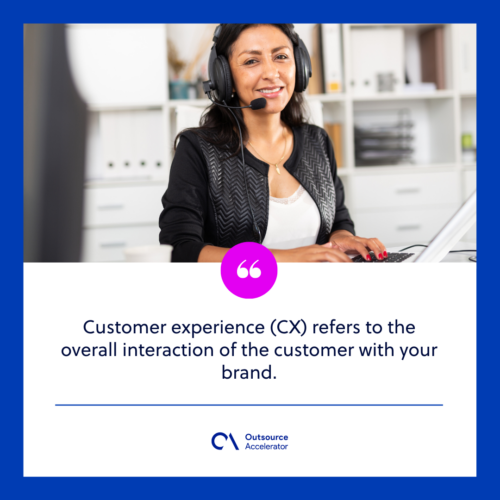
Customer experience (CX) is the overall interaction a customer has with your brand. For example, it covers clients browsing your website, talking to your support team, and getting the product or service they bought.
A great CX is your key to success. Everything you do for clients can shape how they see your brand. In addition, it affects whether they come back for a repeat purchase.
So a positive review at each touchpoint means the customer experience is satisfying. It also gives your company a strong edge in the market. Because of this, many firms now treat CX as a core part of growth. Strong customer satisfaction often starts right here.
Why does customer experience matter in your business?
The way clients recall their experience has a big impact on how they view your business. For example, many marketing experts call customer experience a powerful growth driver that firms use to reach more buyers.
Customer experience also helps you measure whether a company is heading for success or failure. As a result, the better the experience, the more repeat purchases and positive reviews you earn.
A great CX can bring your business these benefits, among others.
- Customer loyalty
- Increased customer satisfaction
- Positive reviews and recommendation
- Brand advocacy
If your brand gives clients an excellent experience, they may promote your business to friends and online. So this gives you free advertising. In addition, it brings natural interest to your product or service and saves you money. Many firms also watch customer retention trends to keep that interest strong.
How to create an excellent customer experience strategy?
Customer experience is now a key part of marketing a business. So here is a list of fail-proof tips to build a great CX strategy for your company.
Have a clear vision
A clear vision is the first step in building an excellent customer experience strategy. For example, it means setting a client-centric approach your team can easily learn and use.
You can also set a few simple principles that show your brand in a good light. Next, make sure every employee knows these principles. As a result, they can practice them in all parts of their training and daily work.
Know your clients
Knowing your clients, including their needs and wants, is a great way to connect with them. So you can create buyer profiles that map their behavior and personality. These profiles help you sharpen your customer service skills for each type of buyer.
This also helps your support team serve people better. After all, if you know your customers, you know what they want, and your company can deliver it.
Connect with your customers
Customer experience gets better when your team builds an emotional bond with a client. For example, prospective buyers turn loyal when they feel attached to your brand and link good memories to it.
So always try to connect with customers each time they reach your store. The more comfortable they feel, the more likely they will come back for a repeat purchase.

Ask for feedback
Ask for customer feedback to see if your team is meeting people’s needs. Today, there are many easy ways to do this. For example, you can use live chat tools, a follow-up email, or a short survey form.
With these tools, you can check if your product met customer expectations. In addition, asking for feedback makes a customer feel valued. As a result, they feel more attached to your business. Clear customer service values keep this habit consistent across the team.
Track your metrics
Finally, it always helps to track your business results and metrics. So you can tell if the changes you made are working and paying off.
Customer experience is one of the hardest things to measure. Because of this, you should use a simple tool to track your CX metrics. You could also find a service provider to help you calculate and monitor them. Many teams then optimize the customer experience based on what the numbers show.
Improve your customer experience with Helpware
To build a super customer experience strategy, you need a reliable team focused on helping your business. Helpware can help you build that perfect team.
Helpware gives its partner companies a data-driven marketing team. So they bring solutions and tactics that create an outstanding CX for your clients. As a result, they help SMEs build strong buyer relationships while cutting operating costs and scaling up.
Visit Helpware‘s website now and let them help you with your customer experience strategy.
Frequently asked questions about customer experience strategy
What is the main goal of a customer experience strategy?
The main goal is to make each touchpoint easy and positive. As a result, buyers trust your brand, come back, and tell others. A good plan ties this goal to clear owners and simple metrics.
How is customer experience different from customer service?
Customer service is one part of the journey, like help with a problem. Customer experience is the full picture across every touchpoint. So service is one moment, while experience is the whole relationship over time.
Which metrics show if a customer experience strategy works?
Common ones include Net Promoter Score, customer satisfaction score, and retention rate. In addition, repeat purchase rate and review sentiment help. So track a small set first, then add more as you learn.
Can outsourcing support a customer experience strategy?
Yes. A skilled outsourced team can handle support, feedback, and CX tracking at a lower cost. As a result, you free up time and still give clients fast, friendly help across channels.






 Independent






