
Leave encashment: Your path to financial resilience


What is leave encashment and how does it work?
Leave encashment turns unused paid leave into cash, giving employees extra money and employers a strong retention tool.
- It converts accrued, unused leave days into a set monetary value.
- Payout rules depend on company policy, contracts, and local labor laws.
- In most countries, the amount counts as taxable income.
Leave encashment is a benefit that many organizations give their staff. The idea seems simple at first. Still, employers and employees both need to understand a few key details. So this guide explains how leave encashment works, its main benefits, and what companies should keep in mind.
What is leave encashment?
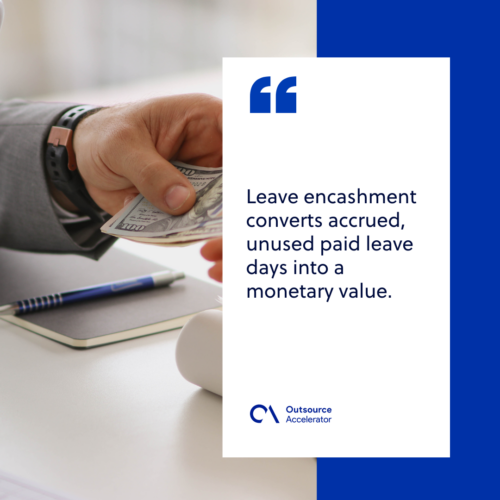
Leave encashment converts accrued, unused paid leave days into a cash value. As a result, it forms an important part of the wider pay package. It rewards workers for leave they earned but did not use. For example, an employee may claim this payout when they resign or retire.
The terms can change based on company policy, employment contracts, and local labor laws. Because of this, staff should always check their own contract first. A clear compensation management plan also helps HR teams apply the rules fairly.
Types of leaves
Employees may get several types of leave. Each one serves a different purpose. In short, they give staff time off for many reasons. Here are the most common types.
Vacation leave
Staff get a set number of paid days off each year. The goal is rest, relaxation, and personal time. So annual leave gives people time to recharge away from work. This also supports better work-life balance.
Sick leave
Sick leave gives paid time off when staff are ill or need care. As a result, they protect their health without losing income.
Parental leave
This leave covers both maternity and paternity time off. It gives new parents time to care for their child. For mothers, it also allows time to recover after birth. Overall, parental leave aims to support parents during a big life event. Still, rules differ by country, as our guide to maternity leave in the US shows.
Family or dependent care leave
This leave lets staff care for sick family members or dependents. In other words, it helps people balance work and family duties.
Bereavement leave
Bereavement leave gives time off after the loss of a close relative. So it offers space to grieve and handle arrangements.
Public holiday
These are set days when most offices close for national or cultural events. In general, staff get a paid day off on these dates.
Compensatory leave
Companies give this leave to staff who work extra hours. As a result, workers can take time off to balance the added hours.
Educational leave
Some firms offer study leave to staff who want to learn new skills. This leave may be paid or unpaid. Usually, it lasts for a set period.
Unpaid leave
Sometimes staff need time off that other leave types do not cover. Unpaid leave lets them step away while keeping their job. However, they do not get paid during this time.
Sabbatical leave
A sabbatical is a longer break from work. Firms usually grant it after several years of service. Meanwhile, staff can use the time for study, travel, or personal projects. Strong benefits like this also boost employee engagement.
Is leave encashment taxable?
In many countries, leave encashment counts as taxable income. Still, the exact treatment varies from place to place. Here are the main points to remember.
- Income tax: the payout adds to your total income. So it is taxed at the normal rate.
- Taxation rate: the rate depends on the amount, your tax bracket, and local tax rules.
- Exemptions and deductions: some countries offer relief under set conditions.
- Employer contributions: at times, employer benefit contributions are taxed in a different way.
- Timing of taxation: tax can fall due at different points, based on when you get paid.
- Reporting and documentation: staff and employers must report the payout as taxable income.
- Special circumstances: different rules may apply at retirement, resignation, or termination.
- International implications: cross-border workers may face double taxation treaty issues.
Calculating leave encashment
The method can change based on company policy, local laws, and contract terms. In most cases, firms use one of these two simple formulas:
Leave Encashment Amount = (Accrued Leave Days) x (Daily Basic Salary)
or
Leave Encashment Amount = (Accrued Leave Days) x (Basic Salary / Total Working Days in a Month)
Benefits of leave encashment
Leave encashment helps both employees and employers. Here is a closer look at each side.
Benefits for employees
Below are the main benefits of leave encashment for staff.
Financial flexibility
Staff can use the cash however they want. So it gives them more financial flexibility. This helps most during emergencies or surprise costs. As a result, they can avoid loans or extra debt.
Supplemental income
The payout adds to regular income. In turn, staff can pay off debt, invest, or save for future goals.
Transition periods
Leave encashment also helps during a job change. For example, it can cover the gap between two roles.
Benefits for employers
On the other side, here are the main gains for employers.
Employee morale and loyalty
This benefit shows that the company values its team’s hard work and commitment. As a result, it lifts morale, job satisfaction, and motivation. Staff also feel more loyal, which cuts turnover.
Positive image
A benefit like this helps firms attract and keep top talent. It shows they care about staff well-being. So it builds a strong public image and reputation.

Flexibility in compensation
Leave encashment adds another form of reward beyond salary. As a result, employers can tailor perks to each person’s needs. Pairing it with other non-monetary incentives makes the package even stronger. In the end, this can lift both the workforce and the bottom line.
Frequently asked questions about leave encashment
What does leave encashment mean?
Leave encashment means turning unused paid leave into cash. In short, staff get paid for leave days they earned but did not take.
Is leave encashment taxable?
In most countries, yes. The payout usually counts as part of your taxable income. However, some places offer relief at retirement.
How is leave encashment calculated?
Most firms multiply your accrued leave days by your daily basic salary. Still, your contract and local law set the exact formula.
When can employees claim leave encashment?
Rules vary by employer. Often, staff can claim it at year end, on resignation, or at retirement.
Why do employers offer leave encashment?
It rewards staff and lifts morale. As a result, it helps firms keep talent and build a better workplace.
Key takeaways
- Leave encashment turns unused paid leave into a cash payout.
- Company policy, contracts, and local law set the terms.
- In most countries, the payout counts as taxable income.
- Employees gain extra cash and more financial flexibility.
- Employers gain higher morale, loyalty, and a stronger brand.






 Independent





