
Cracking the code of overstaffing: Mastering workforce management


What is overstaffing and why does it matter?
Overstaffing is when a company has more employees than it needs to run well, which drives up costs and drags down output.
Here is what to keep in mind:
- Too many workers waste money on wages, benefits, and space.
- Idle staff often lose focus and morale.
- Good workforce planning helps you find the right balance.
Managing your workforce well is key to running a business. You need the right number of people with the right skills. However, that balance is hard to strike. As a result, many firms end up with overstaffing. In this article, we will look at what overstaffing is, the problems it brings, and how to spot and fix it.
Overstaffing: An overview
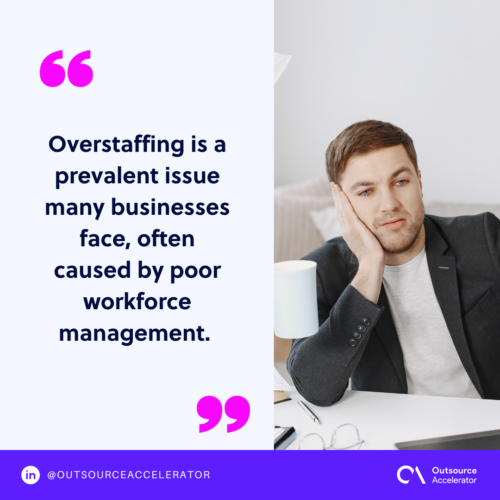
Overstaffing is a common issue for many firms. Often, it comes from poor workforce management. In short, it happens when a company has more staff than it needs to work well.
The effects can be serious. For example, it can pull focus away from core work. As a result, the business may lose its edge. Sound workforce planning is the first line of defense against this drift.
What happens when a company is overstaffed?
When a firm carries too many workers, several problems show up. In turn, they hurt the whole company. Here are the most common ones.
Increased employee turnover
In 2022, at the peak of the Great Resignation, CNBC reported that 50.6 million workers in the US quit their jobs. Overstaffing can feed this trend. When talented people feel undervalued, they often leave. To learn more, see these common reasons for high employee turnover.
Difficulty in decision-making and communication
With too many employees, choices take longer. In addition, messages get lost. As a result, teamwork slows and tasks stall.
Wasted resources and missed opportunities
Overstaffing wastes money on salaries, benefits, and office space. It can also cost you chances to grow. Because staff are stretched thin across too little work, the firm may miss key goals.
Negative impact on organizational culture
When a firm is overstaffed, workers can feel undervalued. This drains morale. As a result, motivation drops and job satisfaction falls.
Increased overhead costs
More staff means higher overhead. The company must cover extra pay and benefits. Over time, these staffing costs eat into profit.
Underutilized staff
Extra staff often sit idle. As a result, their skills go to waste. In short, the business pays for talent it does not use.
Decreased productivity
Too many workers means too few tasks to go around. Because of this, people struggle to stay busy. As a result, output and focus both slip. Tracking productivity ratios can reveal this drop early.
Layoffs
In severe cases, firms turn to layoffs. This aligns the workforce with real needs. However, it also causes job losses and hurts the morale of those who stay.
Dissatisfied clients
Overstaffing can even hurt service. For example, it may slow deliverables or blur ownership. As a result, clients may face delays or weaker support.
Signs of overstaffing
To fix overstaffing, you must catch it early. Here are clear signs that a company may have too many staff.
Underused employees
One sign is idle time. When workers often lack real tasks, effort and money go to waste. In short, everyone loses.
Increased operational costs
Another sign is rising costs without more revenue. This is a red flag, especially when payroll and benefits keep climbing.
Low productivity and efficiency
Do tasks drag on despite a full team? If so, you may be overstaffed. It also shows when work quality dips even with enough skilled staff.
Lack of employee engagement
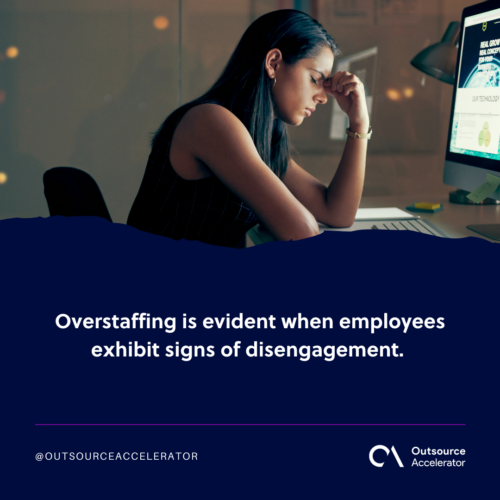
Overstaffing shows up when workers exhibit signs of disengagement. As a result, motivation and job satisfaction fall. In turn, the quality of their work often drops too. Left unchecked, this can grow into wider employee retention problems.
Difficulty allocating resources
Your firm is likely overstaffed if managers cannot spread work well. Especially, if they struggle to use each person’s skills fully.
Dealing with overstaffing issues
Overcoming overstaffing takes a clear, steady plan. Here are steps to help you manage and reduce it.
Conduct a workforce analysis
First, assess your current team. Look for gaps and overlaps. Then review workloads, skills, and roles. As a result, you can set the right headcount for each team.
Implement workforce planning
Next, build a strong workforce plan. It should match staffing to business goals. In addition, factor in seasonality, growth, and market trends.
Optimize workflows and processes
Then streamline how work gets done. Cut steps that add no value. Because of this, the firm can do more with fewer resources. As a result, the need to over-hire drops.
Invest in employee development
Instead of hiring more, upskill and cross-train your current staff. As a result, workers take on more roles and grow their skills. In turn, output rises and extra hires become less likely.
Establish performance metrics
Set clear metrics and KPIs for each role. Then track them often. Because of this, you can use resources well and spot weak spots fast.
Implement flexibility measures
Finally, try flexible work options. For example, flexible hours and remote work help balance busy and slow spells. As a result, staff enjoy better work-life balance. With a happier team, strong results tend to follow.
Frequently asked questions
What is the main cause of overstaffing?
The main cause is poor planning. Firms often over-hire during busy spells. Then demand cools, but the extra staff remain.
How is overstaffing different from understaffing?
Overstaffing means too many workers for the work at hand. Understaffing means too few. Both hurt output, yet in opposite ways.
Does overstaffing always lead to layoffs?
No, not always. Firms can also cut it through natural attrition, cross-training, or new tasks. Layoffs are usually a last resort.
Can outsourcing help prevent overstaffing?
Yes, it can. Outsourcing lets you scale staff up or down with demand. As a result, you avoid carrying idle workers year-round.
How often should I review staffing levels?
Review them at least once a quarter. In addition, check them before busy seasons. Regular reviews keep your headcount in step with real needs.
Key takeaways
- Overstaffing raises costs and lowers output when work runs short.
- Watch for idle staff, rising costs, and low engagement as early signs.
- Strong workforce planning helps you match headcount to real demand.
- Upskilling and flexible work reduce the need to over-hire.
- Review staffing often so small gaps do not grow into layoffs.






 Independent





