
Understanding workplace innovation and how it leads to business success


What is workplace innovation and why does it matter?
Workplace innovation is the steady effort to bring new ideas, tools, and practices into how a company works, so it stays efficient and ahead of rivals.
- It is built over time, not created overnight.
- It works in every industry, from healthcare to finance.
- It drives growth, engagement, and cost savings.
Workplace innovation is one of the most important traits a business can build to stay ahead of the curve. However, it does not just happen overnight. It is grown, nurtured, and encouraged to take root. Many companies now see its value and take real steps to spark it in their teams.
Forbes reported that as much as 63% of businesses are hiring Chief Innovation Officers (CIO), and over 90% use new technology to drive workplace innovation. But what exactly is it, and why does it matter so much? Read on to find out.
What is workplace innovation?
Workplace innovation is the process of adding new tools, ideas, and practices to how an organization works. These changes aim to boost overall efficiency, output, and results. However, it goes well beyond new tech and new steps. It also means building a culture of innovation and promoting workplace collaboration and knowledge sharing.
At its core, the goal is to reshape old ways of working. So it asks teams to question the status quo and try better methods. In turn, this improves customer experiences and business outcomes. Still, it does not always need to be grand or disruptive. It also includes small, steady changes that make daily work smoother. Strong cross-team collaboration often sparks these small wins.
Can workplace innovation work in all industries?
Workplace innovation is not tied to one sector or one type of firm. It fits many industries, from manufacturing and healthcare to technology and finance. What drives it is a simple truth: standing still is not an option. So companies that want to stay competitive keep looking for better ways to work. Many pair this mindset with outsourcing in digital transformation to move faster.
Why should businesses care about workplace innovation?
Workplace innovation gives companies plenty of gains beyond staying relevant. Below are some clear reasons to encourage it in your organization.
Competitive edge
Workplace innovation keeps a business ahead of slower rivals. Firms with an innovative culture can easily adapt to market changes, customer demands, and fast-moving tech. As a result, they stand out and gain an edge.
Increased productivity
Another benefit is a culture of efficiency and steady improvement. So companies can streamline work, remove bottlenecks, and lift output. New tools and practices make this much easier. For more ideas, see these proven ways to boost workplace productivity.
Employee engagement
Workplace innovation gives employees a real voice. It invites them to share ideas and join decisions. As a result, engagement, job satisfaction, and drive all rise. In short, it helps businesses keep their best people. The right employee engagement tools can support this effort.
Improved customer experience
Workplace innovation can lead to new products and processes that fit customer needs better. So firms can offer richer experiences and build loyalty. Continuous improvement keeps those experiences fresh.
Cost savings and efficiency
Workplace innovation also helps businesses cut down costs through leaner processes. With smoother operations and smarter use of resources, companies improve their bottom line.
How to cultivate workplace innovation in your organization
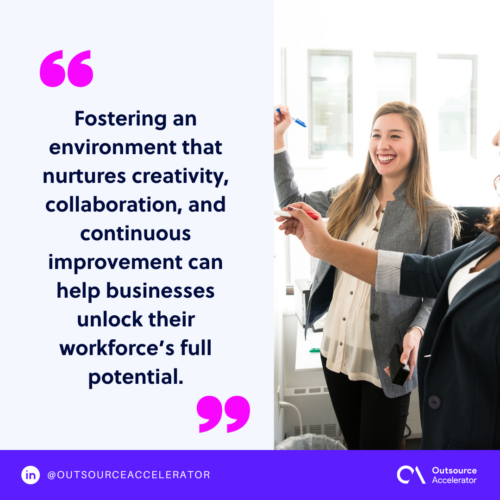
A setting that nurtures creativity and teamwork unlocks a workforce’s full potential. However, this is never a one-and-done task. It is a steady, planned effort that needs the right mix of habits, tools, and support. Read on to learn the steps you can take.
Foster open communication
One of the best ways to build a culture of workplace innovation is open, honest talk. So create platforms for idea sharing, such as team meetings, suggestion boxes, or digital tools. Once these are set up, make sure workers feel safe to speak up. As a result, more ideas will surface.
Empower and engage employees
Give your employees room to own their work. This freedom helps them make choices and drive change. However, it works best when you reward good ideas and effort. So recognize innovative thinking often. Doing so also eases common employee retention problems.
Lead by example
Strong leadership matters a lot here. Managers who lead by example and practice what they preach inspire their teams to do the same. So set the tone from the top.
Encourage continuous learning
Another key step is to support constant learning and growth. So give your people chances to build new skills and sharpen old ones. Workshops and seminars help a lot here. Because of this, your team stays ready for what comes next.
Frequently asked questions about workplace innovation
What is a simple example of workplace innovation?
A common example is a shared digital board for ideas. It lets any team member post a suggestion. As a result, good ideas reach leaders faster.
How do you measure workplace innovation?
You can track new ideas raised, ideas tested, and results gained. Engagement scores and time saved also help. So use a mix of numbers and feedback.
Does workplace innovation only mean new technology?
No, it does not. Technology is one part, but not the whole. Small process changes and a strong culture count too.
Who is responsible for workplace innovation?
Everyone plays a role, from leaders to frontline staff. Leaders set the tone and remove blockers. Still, the best ideas often come from the team.
How can small businesses drive workplace innovation?
Small firms can start with open communication and simple tools. They can reward new ideas without a big budget. So innovation is within reach at any size.
Key takeaways
- Workplace innovation is grown over time, not created overnight.
- It fits every industry and includes both big and small changes.
- It boosts competitiveness, productivity, engagement, and cost savings.
- Open talk, empowered staff, strong leaders, and learning all help it thrive.






 Independent





