
Elements of a game engine

What is a game engine?
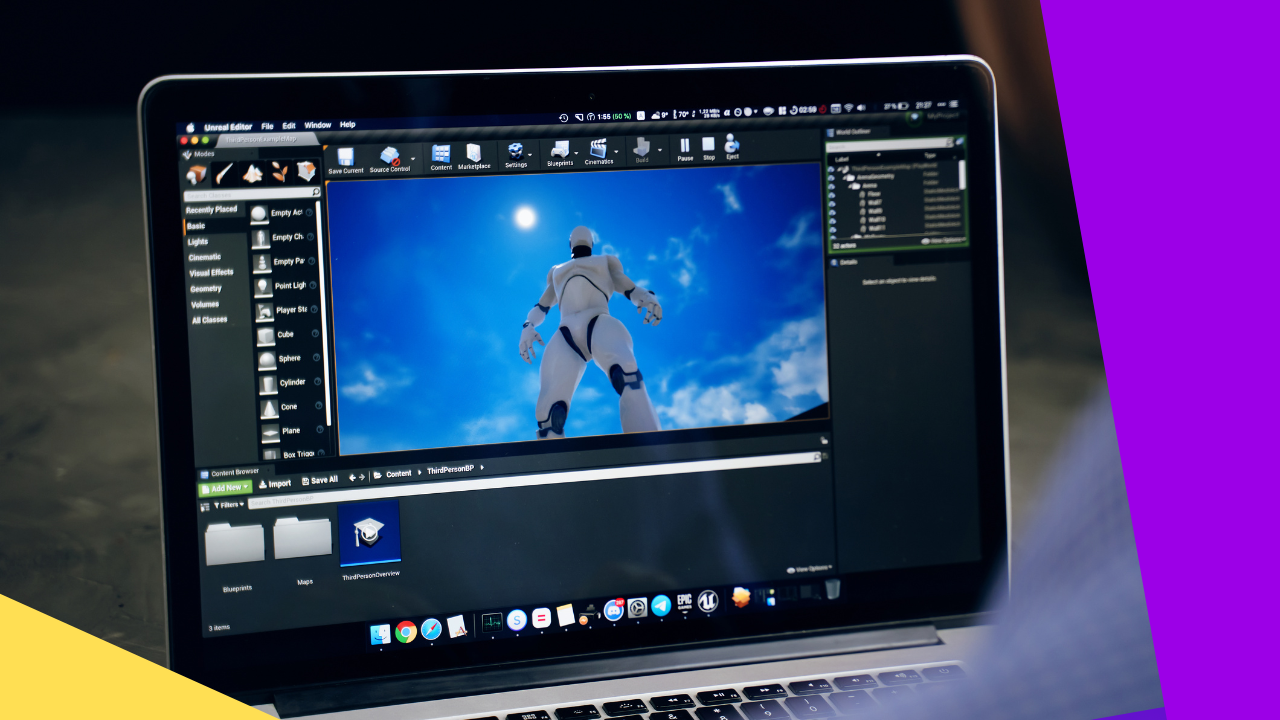
A game engine is software that helps developers build and run games faster, using ready-made tools for graphics, physics, sound, and input.
- It cuts repetitive coding, so teams can focus on gameplay and story.
- It bundles reusable parts like rendering, physics, and audio in one place.
- It can power many game types, from small mobile titles to large 3D worlds.
The gaming world has come a long way from Pac-Man. In fact, games are more advanced than ever, especially in how they get made. First, a game development process[1] must pass many checks before a game ships.
Early games ran on custom rendering engines. For example, each engine had one job: to make that single game. Over time, teams phased out these in-house tools. As a result, commercial game engines took over. Now one engine can make many kinds of games.
Still, a studio will sometimes build its own engine when a game needs it. However, the modern game engine has proven priceless for making new games at scale.
A game engine comes with special tools that reduce the grind of game development. Because of this, it cuts production time. Engines are not all the same. Each one can offer different tools[2] based on the kind of game it builds. Still, all of them act as “development environments” that simplify the work for developers.
Here are some tasks common to most game engines:
- Physics: A game engine should balance simulation quality with the limits of the user’s computer. Physics and immersion matter a lot in games.
- Input: This is a common issue in cross-platform development. It covers how a game responds to player actions and new devices.
- Visual assets processing: This shapes the look of the game. For example, it includes lighting, shading, texture mapping, and depth of field.
With those tasks handled, game creators can focus on the bigger goal. As a result, they get more time to design games that deliver unique experiences.
To speed up game development even more, you can also outsource game developers. MVP Asia Pacific can build a team of expert game developers as an extension of your own staff.
Game engine vs. Game libraries and frameworks
People often use the terms “game library” or “game framework” in place of game engine. However, there are key differences in how they work.
Many game engines are their own pieces of software. Game libraries and frameworks, by contrast, are just programming scripts. They do not build inside their own program. Instead, you import them into an existing code editor.
Because of this, libraries and frameworks are easier to add to a project. They are simply sets of data and pre-written code. Many of them can copy the benefits of a game engine, at least to a point.
These are a fair option for many teams. Still, a game engine is worth the spend. You get a wider list of handy tools, more processing power, and less source code to write.
Components of a game engine
To build games well, a game engine needs a set of core parts. Together, these parts make development smooth.
Input
This covers the devices that capture what a player does. As a result, the game can actually be played. So a game engine must support input from a mouse, gamepad, or joystick.
The game engine handles input in two main ways:
- Input events: The computer spots the player’s action and triggers custom code.
- Input polling: The engine records position values, such as the tilt of a controller.
Artificial intelligence
Artificial intelligence (AI) now plays a bigger role than ever in games. It shapes both the software design and the gameplay itself. In addition, AI has helped games improve their storytelling.
Ready-made scripts add AI into a game. The AI then gives responses based on how a player behaves. For example, most engines prepare a menu of reactions that the game runs depending on the player’s actions.
Graphics engine
This part is also called the rendering engine. It handles the 2D or 3D rendering of the game’s visuals. After all, a game’s graphics are key to how it looks.
A graphics engine can add lighting effects, shadows, bump maps, and blended animation. As a result, it helps sell the immersion of the game world.
Physics engine
We often take physics for granted, even in a game. Still, it is an important feature for immersion. Without a physics engine, movement would look strange and unnatural.
A game engine applies the physical rules we expect during play. For example, this includes velocity, acceleration, fluidity, and projectile motion.
Sound engine
The sound engine, or audio engine, controls the sound of a game. The engine builds audio files into the code. So specific actions in the game then trigger them to match the gameplay.
Networking
The internet and globalization have made games far more interactive. Many games now support online multiplayer and social play. As a result, many modern game engines include scripts and tools to make this an option.
Why a game engine is important
Without a game engine, developers must spend more time on slow, repetitive coding. This work is vital to how a game runs. However, most people agree that the one-of-a-kind experience matters more.
A game engine handles the routine tasks. As a result, developers get more time for unique elements. These include character models, textures, and object interaction.
Game developers are also in high demand. So tying up their time with work an engine could do is wasteful. Instead, they could build new games or bring old ones to new platforms.
Frequently asked questions
What is a game engine in simple terms?
A game engine is software that gives developers ready-made tools to build a game. It handles graphics, physics, sound, and input. Because of this, teams write less code and ship faster.
What is the difference between a game engine and a game framework?
A game engine is a full piece of software with its own tools. A framework is a script you import into a code editor. So a framework is lighter, while an engine offers more power.
Do I need a game engine to make a game?
No, you can code a game from scratch. However, a game engine saves a lot of time. For most teams, it is the faster and cheaper choice.
What are the main parts of a game engine?
The core parts are input, AI, graphics, physics, sound, and networking. Together, they run the game and free developers to focus on design.
Can you outsource game engine development?
Yes. Many studios outsource game developers to build or extend their engine. As a result, they scale their team without long hiring cycles.
Key takeaways
- A game engine is software that helps developers build and run games faster.
- It handles graphics, physics, sound, input, AI, and networking in one place.
- A game engine differs from a library or framework, which are lighter scripts.
- Engines free developers to focus on unique gameplay and story.
- You can outsource game developers to build or extend an engine at scale.
References:
1. Game development process. Ramadan, R. and Widyani, Y., 2013, September. Game development life cycle guidelines. In 2013 International Conference on Advanced Computer Science and Information Systems (ICACSIS) (pp. 95-100). IEEE.
2. Different tools. Baba, S.A., Hussain, H. and Embi, Z.C., 2007. An overview of parameters of game engine. IEEE Multidisciplinary Engineering Education Magazine, 2(3), pp.10-12.






 Independent





